
Gameplay
Two modes: one circle in portrait orientation and two circles in landscape, with a shared score and separate targets for each side. The player starts with one heart; completing each 30-second phase restores one, up to a maximum of three.
Projects
Alongside work on IoT systems and cloud platforms, LaserWorx develops its own Android applications. Below is the first of them — being prepared for release — and what is currently in the works.
An original arcade game built on a single gesture and precision in time. Tap the board as the white pulse enters the marked coloured arc. Hits in the centre of the arc build a "perfect" chain with a rising multiplier, and every five docks the pulse reverses its direction of rotation.
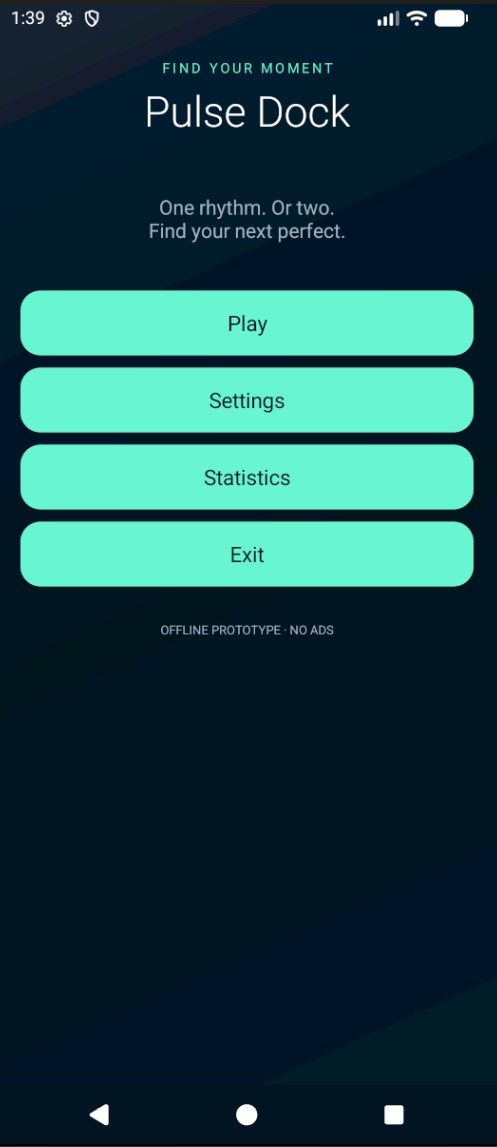
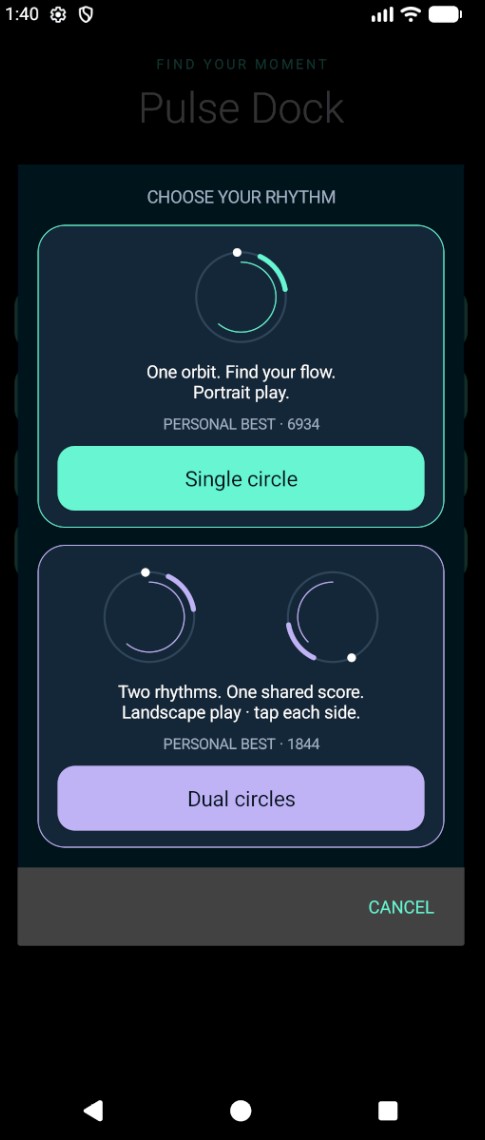
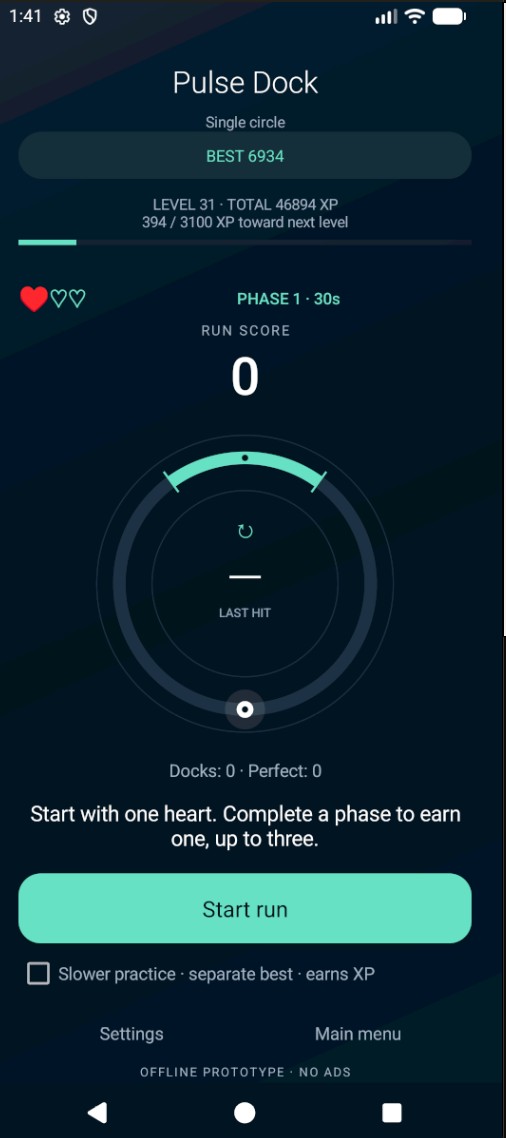
Two modes: one circle in portrait orientation and two circles in landscape, with a shared score and separate targets for each side. The player starts with one heart; completing each 30-second phase restores one, up to a maximum of three.
Successive phases speed the pulse up and narrow the target. An ordinary hit is worth 10 points; a chain of perfect hits multiplies the base up to eightfold. Experience points earned build the player level, and they neither affect difficulty nor offer paid shortcuts.
All gameplay works without a network connection, and progress is stored only locally on the device. No accounts, no analytics, no payments.
The game is free and funded by advertising. A full-screen ad can appear only after a finished run — never during play, a pause or a menu — and its frequency is capped inside the application. In Europe we ask for consent before requesting any ad; refusing blocks nothing in the game. Details in the privacy policy.
The game logic is separated into a module independent of Android and covered by unit tests; the application layer has its own set of interface and lifecycle tests. State persistence is versioned, with safe restoration of older formats.
Native, labelled menu controls, an option to reduce decorative animation, a haptics toggle, contextual help for every setting, and a slower practice mode with its own personal best.
Kotlin, native Canvas drawing, Android SDK, Gradle. No game engine and no third-party graphical or audio assets — the entire visual layer was created for this project.
A second Android game is being built on the foundation laid with Pulse Dock — the same approach to separating logic from the presentation layer, to testing and to offline operation. The project is in production; details and materials will be published on this page before release.